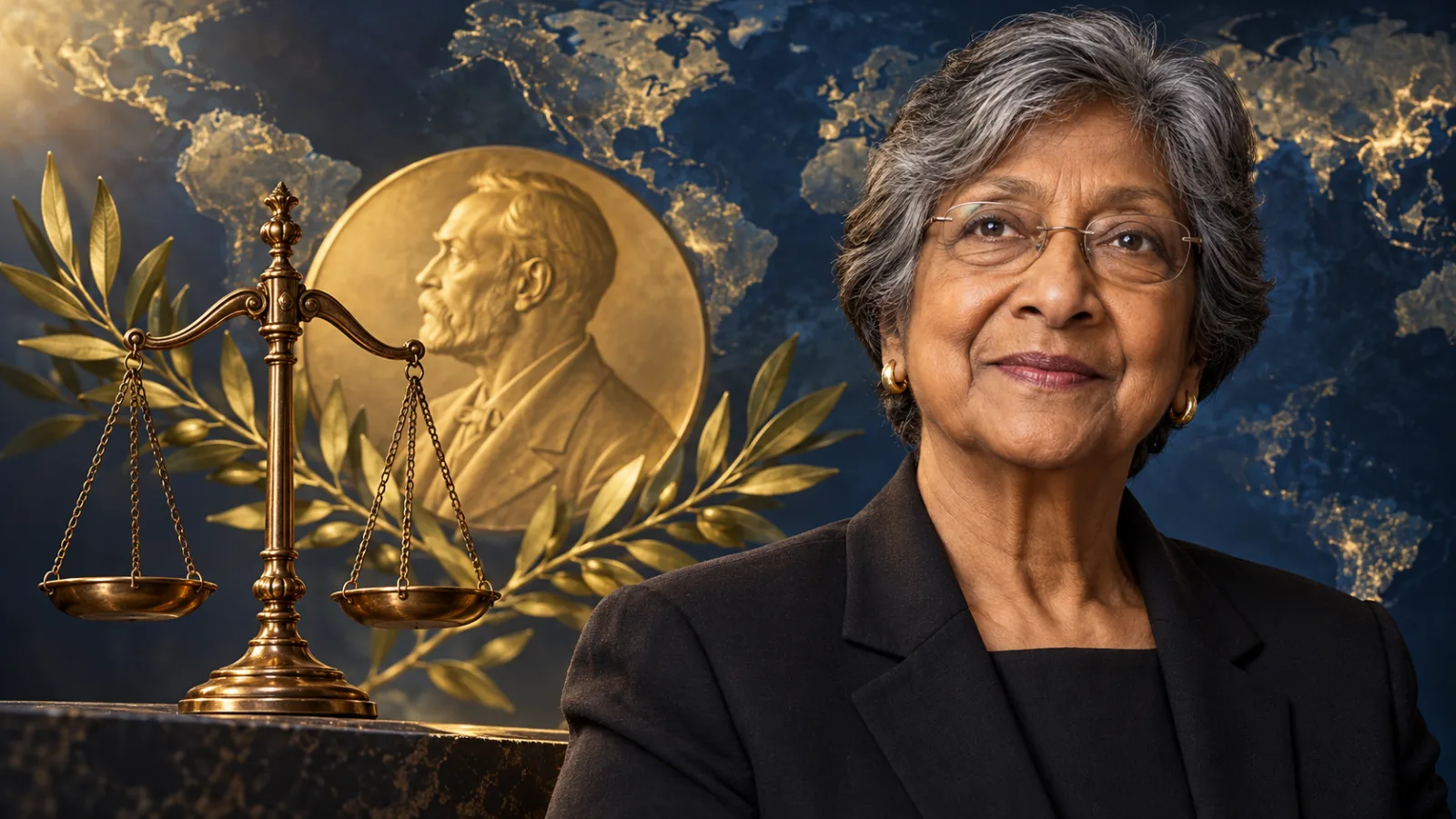
The Norwegian Nobel Committee announced in Oslo on 9 October that it was honoring Navanethem "Navi" Pillay for her work to protect human rights and strengthen international justice. The Committee highlighted the 85-year-old jurist's contributions to the prosecution of war crimes, crimes against humanity, and genocide.
The award citation drew attention to a period in which international legal institutions are under pressure and power politics have taken precedence over legal principles. The Committee emphasized the importance of the rule of law for resolving conflicts without resorting to violence, ensuring victims' access to justice, and holding perpetrators accountable.
From the anti-apartheid struggle to international courts
Born in 1941 in Durban, South Africa, to a family of Tamil Indian descent, Pillay began her legal career by fighting against the discrimination created by the apartheid regime. She defended political prisoners and anti-racism activists and worked to secure access to lawyers for the Robben Island prisoners, including Nelson Mandela.
After studying at the University of Natal, Pillay completed a master's and doctorate at Harvard. In 1995, she was appointed a judge of South Africa's High Court. The same year, she began serving at the International Criminal Tribunal for Rwanda; from 1999 to 2003, she was the tribunal's president.
The 1998 Jean-Paul Akayesu judgment, on whose bench Pillay sat, was a significant milestone in international criminal law. The ruling established that rape and other forms of sexual violence committed with the intent to destroy a group can constitute genocide.
In 2003, Pillay became one of the first judges of the International Criminal Court, and from 2008 to 2014 she served as the UN High Commissioner for Human Rights. During this period, she worked on the protection of civilians, the rights of women and minorities, and the investigation of human rights violations.
Her role in the Gaza inquiry
One of Pillay's recent roles was chairing the UN's Independent International Commission of Inquiry on the Occupied Palestinian Territory and Israel.
In its report published in September 2025, the Commission concluded that Israel committed genocide in Gaza and presented findings that senior Israeli officials incited genocide. The Israeli government rejected the allegations in the report.
Pillay is also serving as a judge ad hoc at the International Court of Justice in the case brought by The Gambia against Myanmar over allegations of genocide against Rohingya Muslims.
The Norwegian Nobel Committee described the common thread of Pillay's work across different countries and institutions as the accountability of states and individuals before the law. The award announcement stressed that lasting peace can be built only together with justice and the protection of human dignity.