Yoga by Candlelight and Under Gothic Architecture
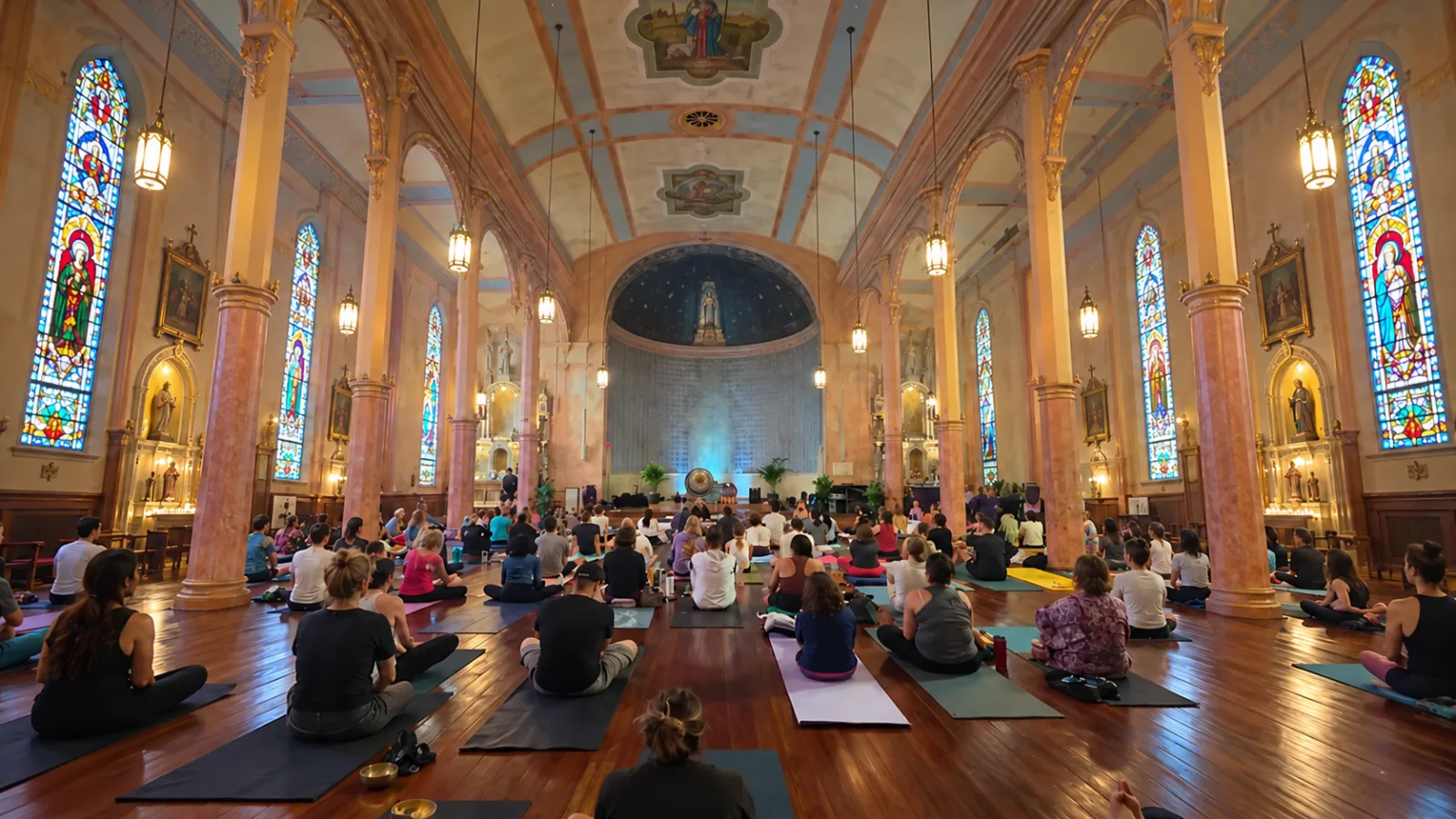
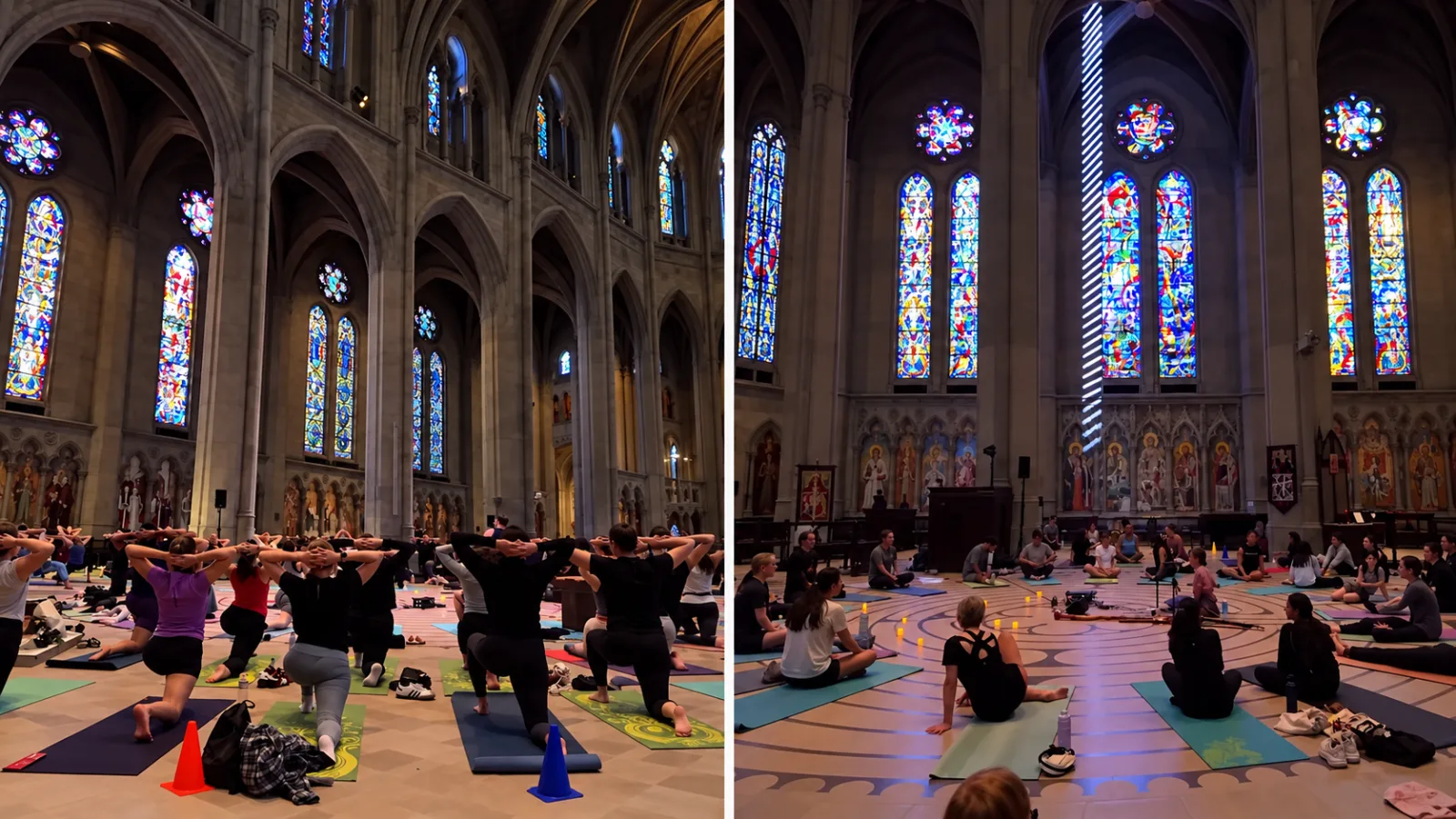
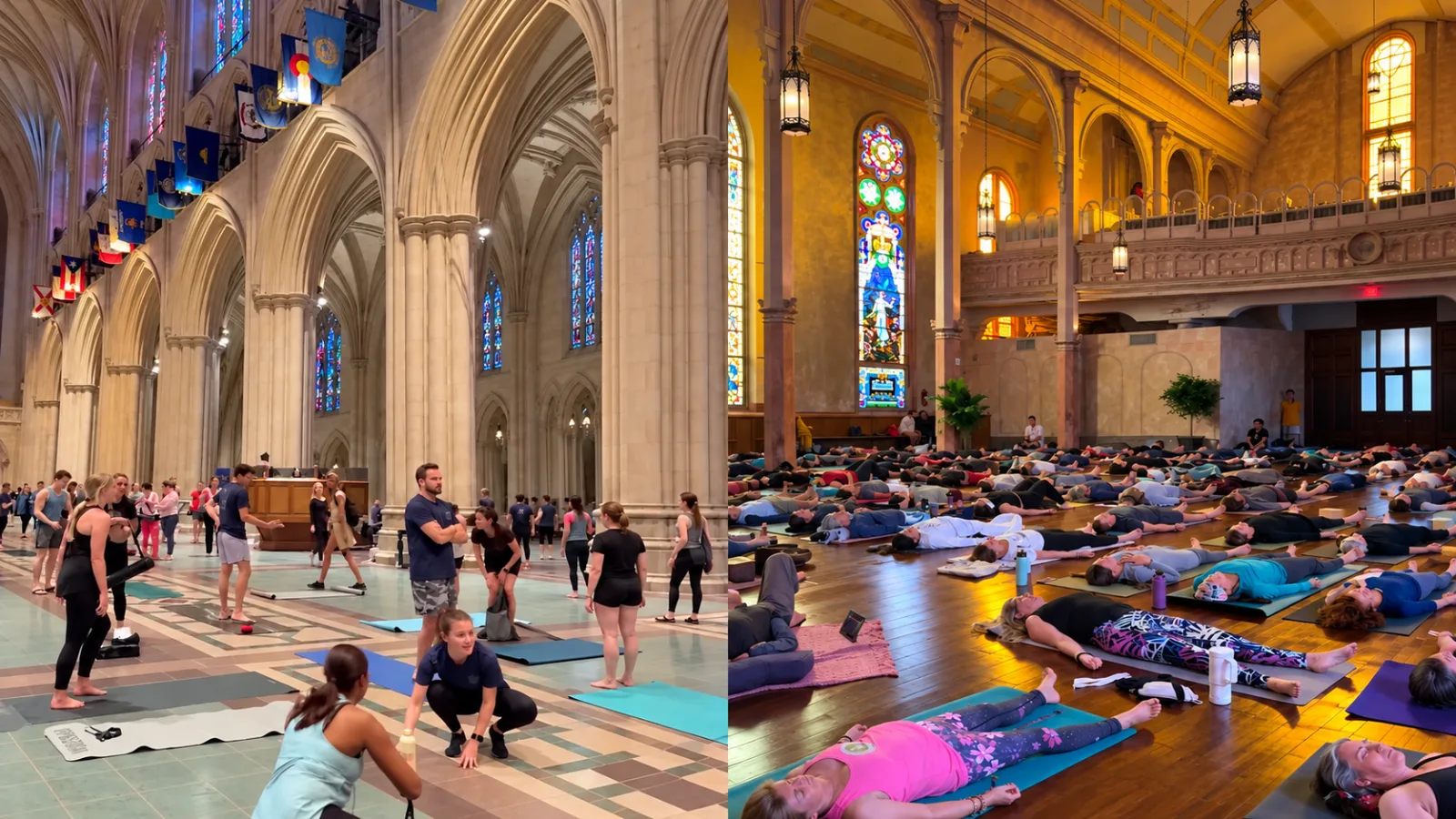
Historic cathedrals in the United Kingdom and the United States are particularly leading this trend. Grace Cathedral, one of San Francisco’s iconic landmarks, brings together hundreds beneath its soaring Gothic columns with weekly “Yoga on the Labyrinth” events. In central London, St Martin-in-the-Fields has become a haven for those seeking an escape from city life with candlelit meditative music and breathwork sessions.
Participants say the unique acoustics produced by the high ceilings and stone walls of these historic venues amplify the resonance of Tibetan singing bowls and breath sounds used during sessions. The atmosphere of “awe and serenity” preserved over centuries eases the transition into deep meditative states.
“Not a Religious Rite, but a Public Health Service”
Church administrations frame this move not as a change in religious practice, but as a social vision. Statements emphasize preventing these historic buildings from sitting idle and contributing to the secularizing modern society’s quest for mental health and tranquility. The fusion of yoga philosophy with the spiritual fabric of the setting is described by participants as “a modern healing experience in the shadow of history.”
No Established Practice in Turkey: The Mardin Crisis Sparked Debate
In contrast to this widespread trend in the West, there is no established practice in Turkey of historic churches opening their doors to yoga sessions. Active churches in the country are used solely for worship, while inactive historic structures host only official events such as cultural exhibitions or classical music concerts.
In a recent incident, the sharing on social media of a yoga session organized by a tour group at the historic Mor Yuhanon Dilimiyo Syriac Church in the Savur district of Mardin triggered a major crisis in the country. The Syriac community and the Midyat Syriac Churches Foundation, emphasizing the sanctity of places of worship, voiced strong objections. The escalating debate—culminating in an apology from the instructor who organized the event to the community—once again laid bare Turkey’s social sensitivities and the reality that places of worship cannot be used for secular purposes.
As this global trend continues to spread, it is inspiring and sparking a new wave of debate worldwide about how sacred spaces can be preserved, what boundaries should be maintained, and how they can be carried into the future as living community centers.