The history of electric vehicles dates back to the first half of the 1800s. Experiments that began with non-rechargeable batteries had turned into automobiles that carried passengers and competed in races by the end of the century.
At a time when horse-drawn carriages filled the streets and transportation largely relied on animal power, some inventors were pursuing a different question: Could a vehicle be propelled using electricity? Throughout the 19th century, studies seeking an answer to this question produced the first examples of electric automobiles. Small-scale models developed in Hungary, the Netherlands, and the United States showed that a battery and an electric motor could be used together in transportation.
It is difficult to attribute the birth of the electric automobile to a single inventor or a definite date. The development of batteries, motors, and the systems that transmit motion to the wheels was made possible by work carried out in different countries. Therefore, the history of electric transportation is regarded as a long process composed of complementary inventions.
One of the pioneers of this process was Scottish inventor Robert Anderson. The battery-powered vehicle he developed in the 1830s is counted among the early examples of electric transportation. However, the batteries used in Anderson’s vehicle could not be recharged. The inability to continue with the same batteries once the energy was depleted was one of the main obstacles to turning this experiment into a practical means of transport. As Sami Akbıyık’s article published in Independent Turkish also notes, Anderson’s work is presented among the first steps toward the idea of the electric automobile.
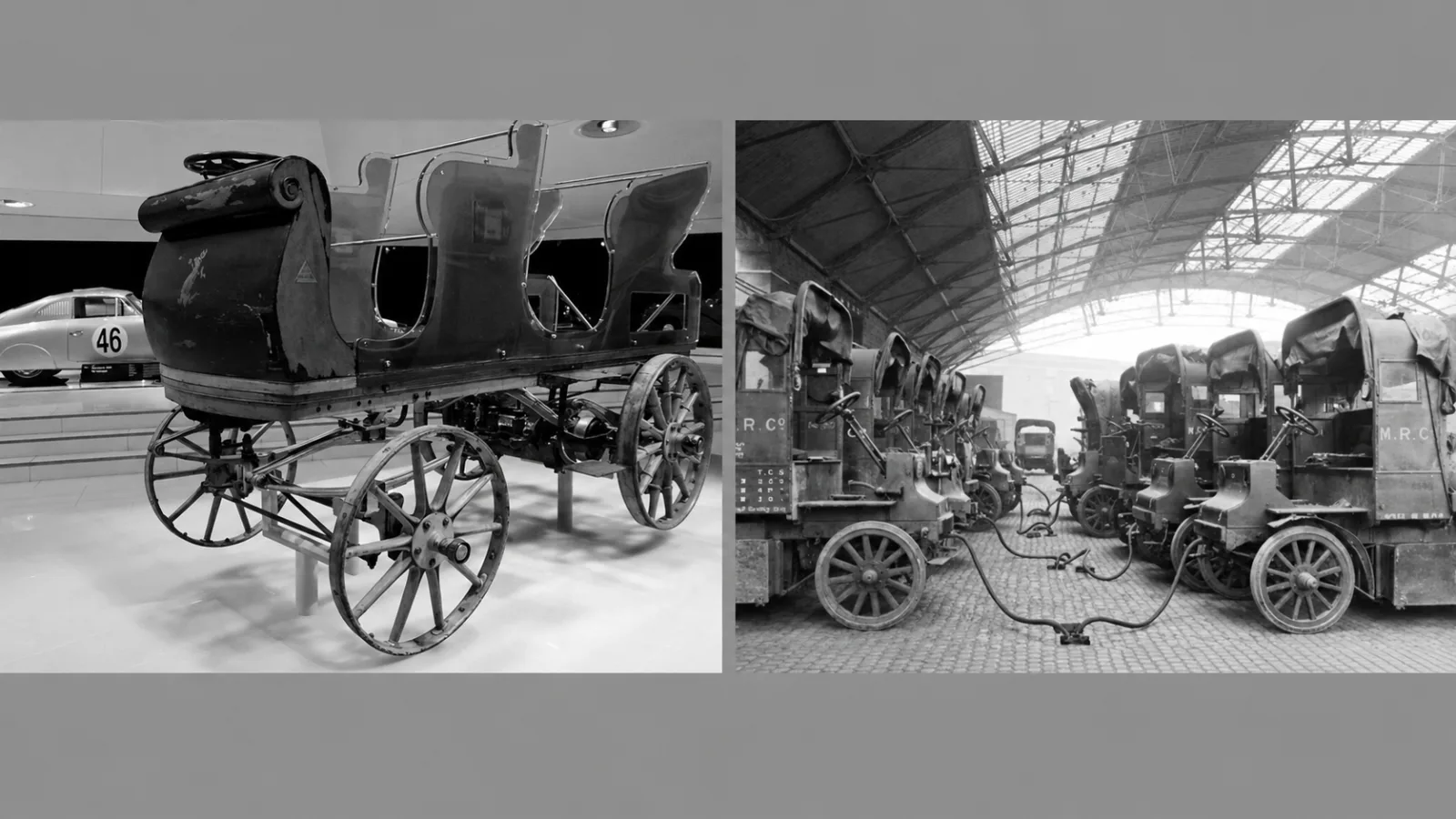
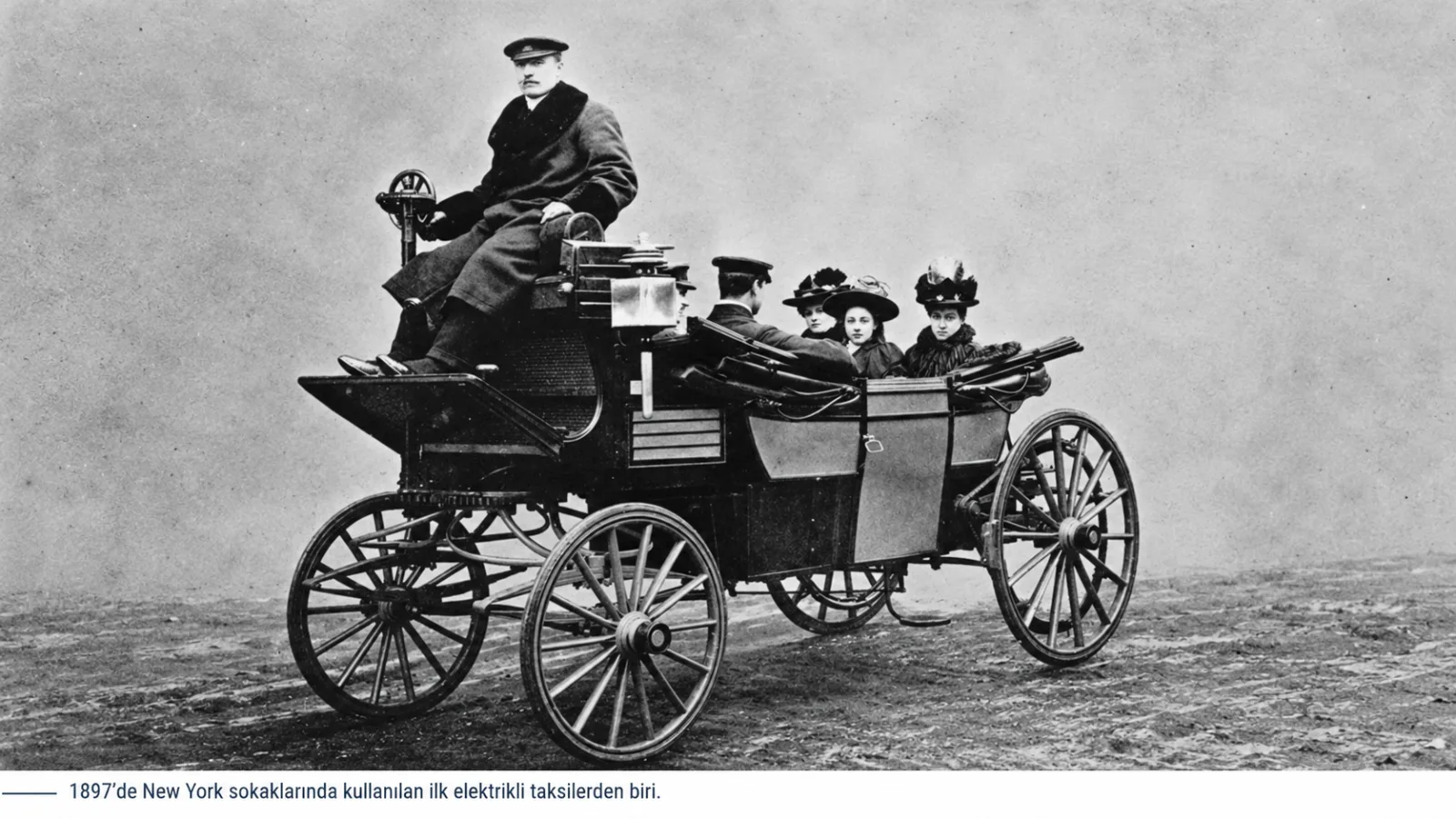
The first electric vehicles resembled horse-drawn carriages much more than today’s automobiles in appearance. The manufacturing mindset of the time was reflected in designs, from the driver’s seating position to the mechanisms that steered the vehicle. Some models used lever-style controls instead of a round steering wheel. The transition from the horse-drawn carriage to the motor vehicle required not only a change in the energy source but also a reshaping of driving habits.
One of the important milestones in the development of electric vehicles was rechargeable batteries. With French physicist Gaston Planté’s work in 1859–1860, the lead-acid accumulator emerged, offering new possibilities for storing and reusing electrical energy. The example dated to around 1860 in the Science Museum Group’s collection bears witness to the early period of this technology. For electric vehicles, this meant the possibility of recharging a depleted battery.
In 1881, French inventor Gustave Trouvé carried out one of the noteworthy experiments in electric transportation. Basing himself on the chassis of a tricycle developed by British bicycle designer James Starley, Trouvé installed an electric motor and a battery in this vehicle. In this way, a conveyance designed to move by pedal power was transformed into a setup capable of traveling on electricity. Trouvé’s work was one of the early examples of adapting existing vehicles to an electric system.
In the United States, the vehicle developed by chemist William Morrison around 1890 increased interest in electric transportation. The six-passenger vehicle that emerged in Des Moines, Iowa, could reach a speed of about 23 kilometers per hour. Although its appearance still resembled a horse-drawn carriage, its ability to carry passengers showed that electric vehicles could move beyond experimental models.
Toward the end of the century, electric vehicles began to attract the attention of the affluent and of entrepreneurs. Nevertheless, battery capacity, vehicle cost, and charging opportunities needed improvement. As important as getting a vehicle to move was how far it could travel and how it could be readied for use again.
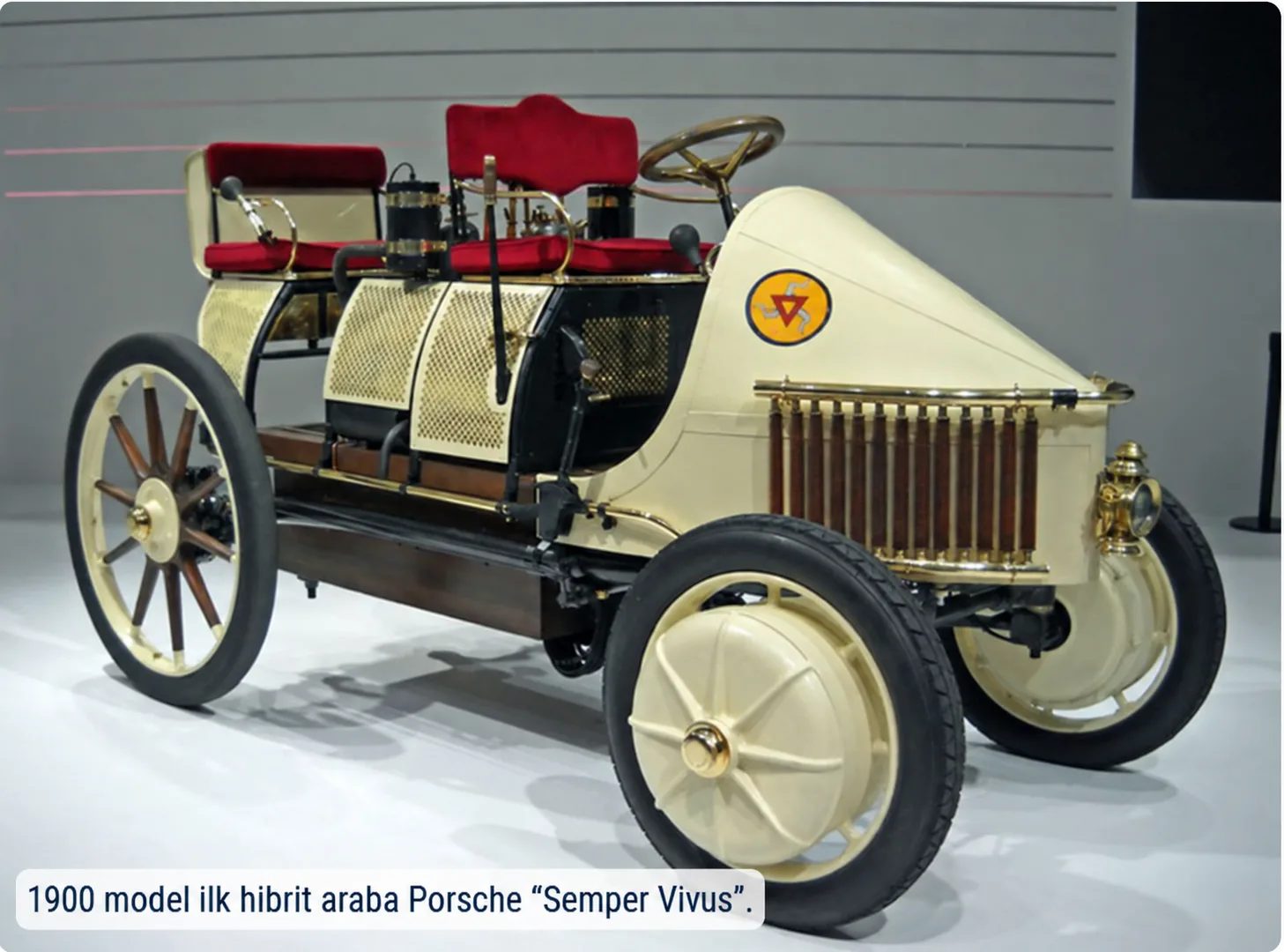
One of the notable designs of this period was the Egger-Lohner C.2 Phaeton, developed by Ferdinand Porsche in 1898. The electric vehicle, also referred to simply as “P1,” was Porsche’s first automobile design. According to the manufacturer’s historical records, the vehicle could offer a range of up to 80 kilometers under favorable conditions. This feature showed that the electric automobile had moved beyond being merely a contraption that ran for a brief demonstration.
P1 also drew attention in a 40-kilometer race held in September 1899 as part of the international motor vehicle exhibition in Berlin. At the wheel, Ferdinand Porsche finished the race with three passengers on board, 18 minutes ahead of his closest rival. The fact that an electric vehicle could compete in a race with its passengers was a concrete example of the technical progress recorded over the century.
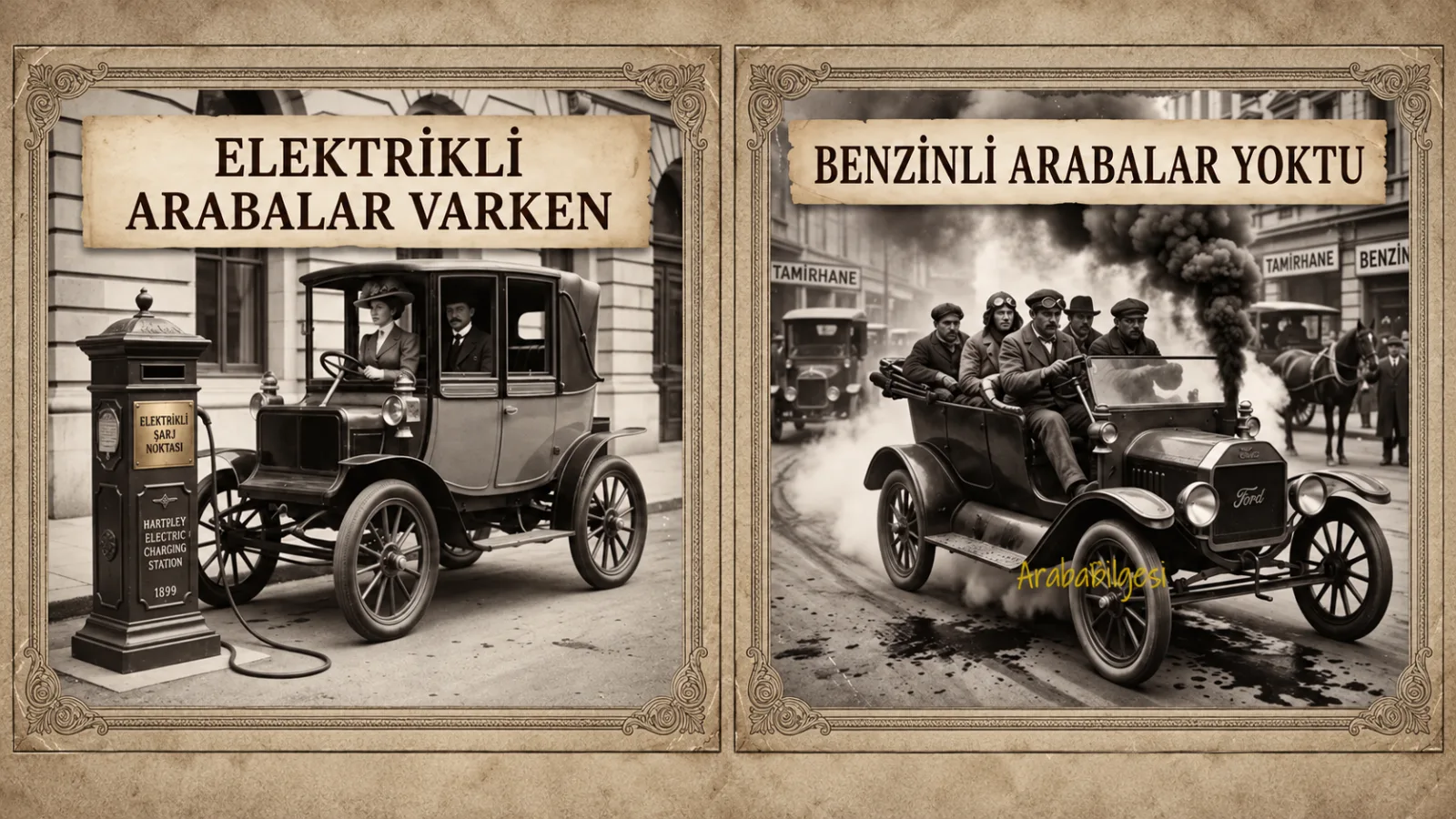
By the end of the 1890s, electric automobiles were attracting interest in urban life with their quiet operation and ease of use. The comfort they offered in contrast to the noise and exhaust smell of gasoline vehicles set them apart among the transportation options of the period. In those years, when horse-drawn carriages were still on the streets, electricity had become one of the forces poised to shape the future of transportation.