In Japan, the early warning system’s mistaken calculation of an earthquake’s magnitude as 9.9 led to public concern and disruptions to train services. The Japan Meteorological Agency retracted the alert and apologized.
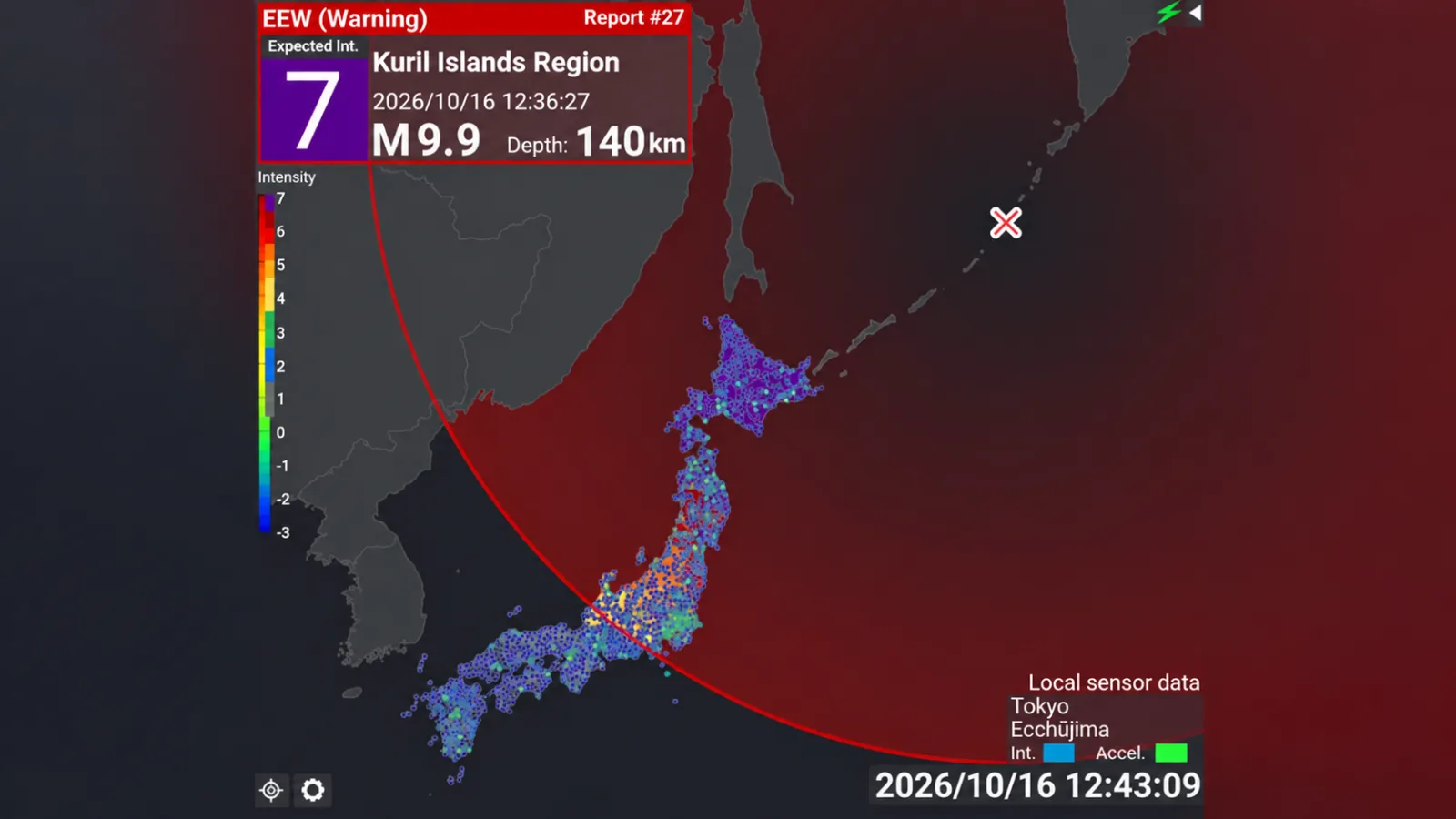
On Friday, 16 October, notifications sent to mobile phones and announcements over loudspeakers in public spaces caused earthquake panic in various parts of the country. It was stated that the alert issued by the Japan Meteorological Agency (JMA) at 12:40 local time resulted from an incorrect calculation of the location and magnitude of an earthquake that occurred near Russia’s Kamchatka Peninsula.
The 6.9-magnitude earthquake was computed as 9.9 by the system
According to the agency’s assessment, the earthquake near Kamchatka had a magnitude of 6.9. However, the early warning system identified the epicenter around the Kuril Islands and calculated the magnitude as 9.9. As a result, a strong shaking warning was issued for a wide area stretching from northern to central Japan.
As the anticipated severe shaking did not occur, the erroneous alarm was canceled eight minutes after it was issued. The actual earthquake, which occurred at a depth of about 160 kilometers, was reported not to pose a tsunami risk.
Train services temporarily suspended
Following the false alarm, safety systems were activated on some railway lines. Certain services of JR Hokkaido were temporarily suspended due to a cutoff of power supplied to trains. Footage shared on social media showed some visitors at an amusement park adopting the earthquake protection position after hearing the warning.
Agency apologizes, investigation launched
Officials from the Japan Meteorological Agency apologized at a press conference for the erroneous alert. While it was stated that there was no cyberattack behind the incident, the exact technical cause of the miscalculation is being investigated.
Although some reports linked the error to issues with the location calculation formula and data processing, the agency’s initial statements emphasized that the investigation is ongoing. Therefore, no definitive conclusion about the source of the malfunction has yet been shared.