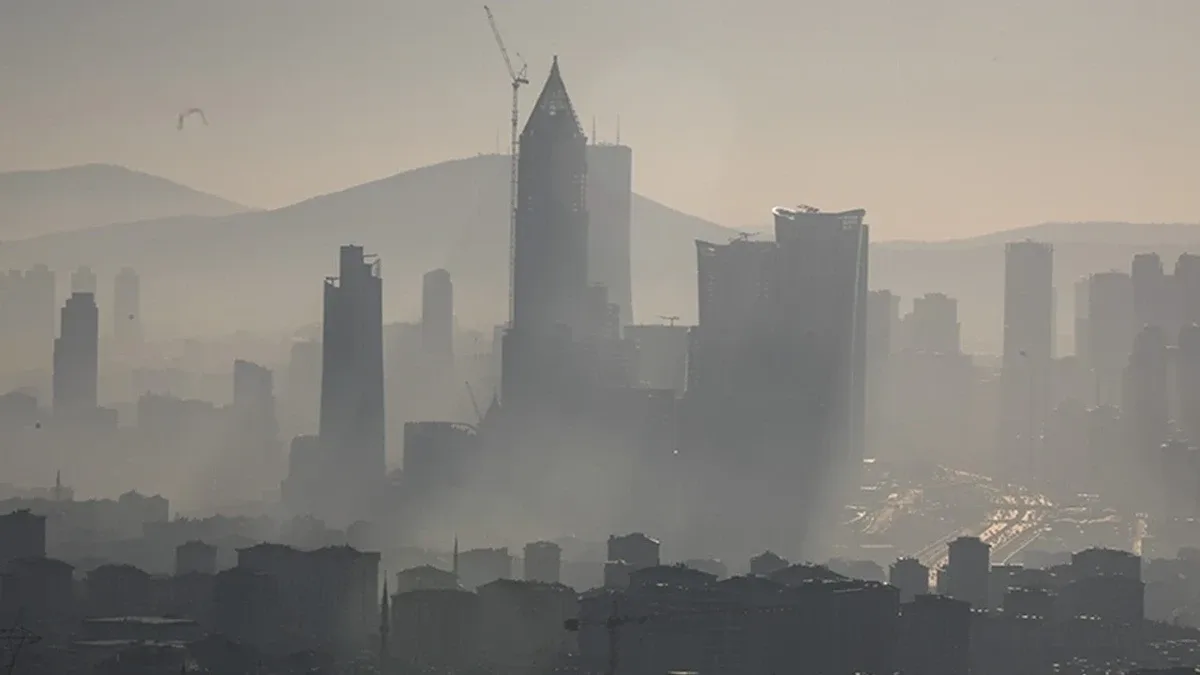
On Sunday, 11 October, the hazy air around the Bosphorus in Istanbul drew attention. According to Ensonhaber, along the Istanbul, Kocaeli, Yalova and Sakarya corridor, high pressure and limited air movement made it difficult for pollutants from traffic and fossil fuel use to disperse.
Air quality "sensitive" in Kagithane and Yenibosna
In a report by Gazete Kritik based on Istanbul Metropolitan Municipality (IMM) measurements at 10:00 on 11 October, the air quality index was reported as 108 in Kagithane and 101 in Yenibosna. While these two stations were in the "sensitive" category, Esenler, Sancaktepe, the D-100 traffic station and Selimiye were reported at a "moderate" level.
However, the overall air quality index does not directly indicate the amount of nitrogen dioxide. The same report noted that the nitrogen dioxide index in Yenibosna was 101, while particulate matter pollution was the main driver of the higher overall index in Kagithane. Therefore, readings at different stations cannot be interpreted to mean that the same pollutant is present at the same concentration citywide.
Nitrogen dioxide can affect the respiratory tract
Nitrogen dioxide (NO2) is an air pollutant formed primarily by the combustion of fuels. Motor vehicles, power generation and various combustion processes are among the sources of this gas.
According to scientific information from the US Environmental Protection Agency, inhaling high concentrations of nitrogen dioxide can irritate the respiratory tract; it can increase coughing, wheezing and breathing difficulty, especially in people with asthma. Children and older adults are also among the groups more susceptible to its effects.
Hazy appearance is not a standalone measure of pollution
Attributing all of the haze over the Bosphorus solely to nitrogen dioxide would require detailed measurements. Humidity and atmospheric conditions can also play a role in haze formation. Moreover, a value recorded at a single station at a given hour does not represent air quality across the whole of Istanbul.
In Turkey, air quality is monitored through the Ministry of Environment, Urbanization and Climate Change's National Air Quality Monitoring Network. In current assessments, it is important to consider, alongside hazy visuals, the pollutant type, time of measurement and station data.