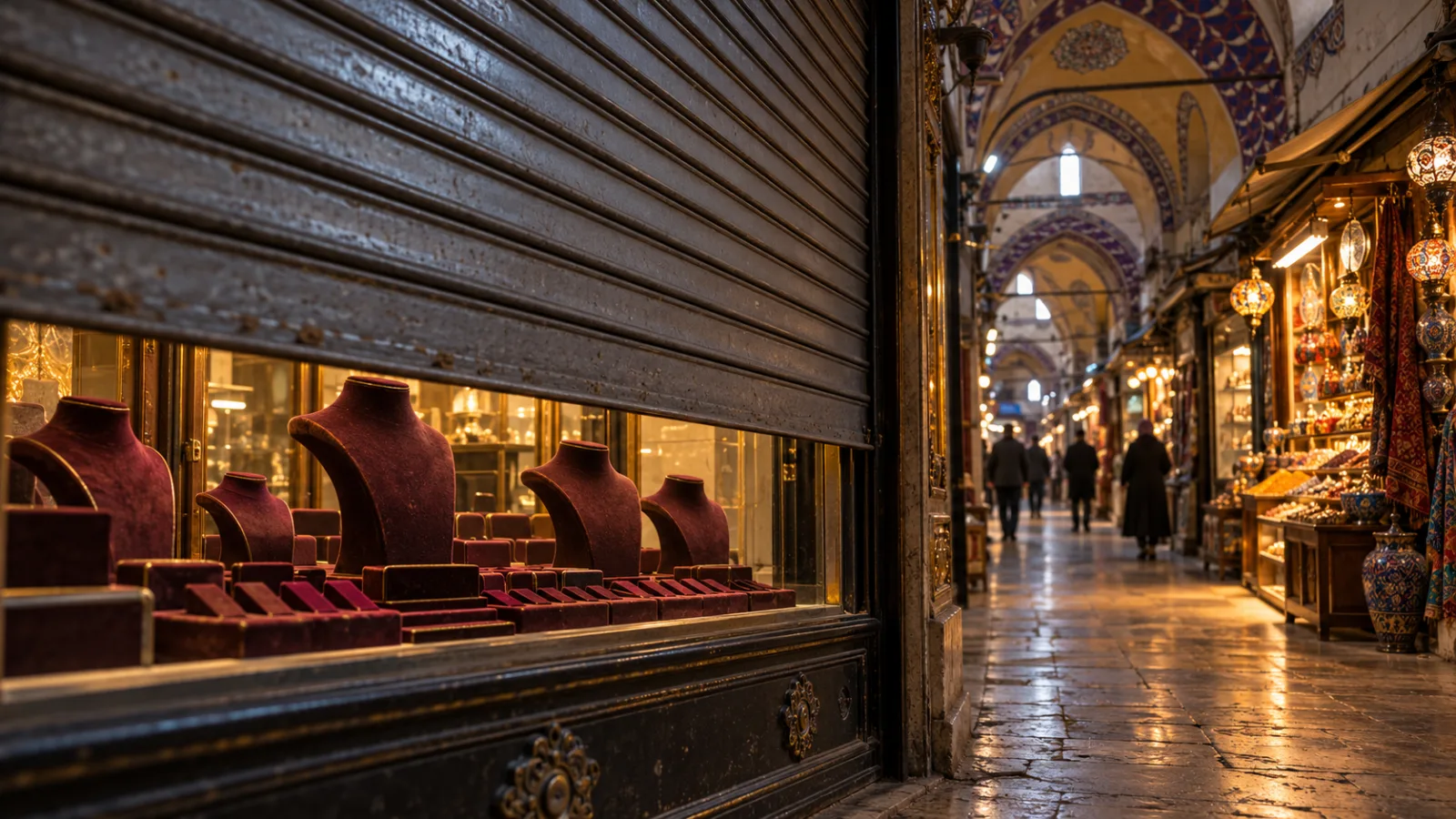
As one of Istanbul’s key hubs for gold and jewelry trade, the Grand Bazaar is undergoing a transformation under the strain of economic challenges facing the jewelry sector. Some jewelers that have operated in the bazaar for many years are closing their doors due to falling sales and the burden of operating expenses.
Assessments from industry representatives cited in a 28 October 2026 report by Yener Karadeniz of Ekonomim indicate that the problem stems both from weakened domestic demand and competitive conditions in foreign markets. The drop in sales of pieces requiring handcraftsmanship is particularly challenging for businesses in the bazaar where production and trade go hand in hand.
“The number of jewelers closing is quite high”
Ercan Özboyacı, Chair of the Istanbul Chamber of Commerce Jewelry Committee, says sales in the Grand Bazaar have nearly come to a standstill, adding, “The number of jewelers closing is quite high.”
According to Özboyacı, the shops vacated by jewelers are being taken over by businesses selling spices, souvenirs, and counterfeit products. Thus, the transformation in the bazaar is becoming evident not only through changes in ownership but also through shifts in the types of goods sold and commercial activities conducted.
Purchasing power and investment preferences are reflected in sales
The decline in consumers’ purchasing power in the domestic market is cited among the main challenges facing the jewelry sector. Özboyacı also notes that the recent drop in gold prices and high interest returns have influenced investors’ preferences.
The capital-intensive nature of jewelry puts additional pressure on businesses during periods of slow sales. Firms that can operate with lower capital and sell products aimed at tourists are finding opportunities in the vacated commercial spaces.
Rising exports are not equally reflected in processed jewelry production
Different trends are also visible in the sector’s external outlook. According to Turkish Exporters Assembly data cited in the report, jewelry exports rose 10.8 percent in January–September 2026, reaching 6.86 billion dollars.
However, Mustafa Özcan, Chair of the Jewellery Exporters’ Association, emphasizes that gold bullion led the overall increase, while exports of processed jewelry—critical for manufacturers—declined. Özcan adds that the erosion of Turkey’s gold price advantage is also affecting the course of exports. This suggests that the rise in total export figures does not, by itself, explain the situation of businesses that rely on craftsmanship and production.
The contraction may ripple out to masters and workshops
Jewelry activity in the Grand Bazaar forms a broad network encompassing repairers, stone-setting masters, design studios, and suppliers. The decrease in sales points brings the risk of shrinking workloads for those employed by these businesses.
Another issue highlighted in sources is the bazaar’s traditional craft identity. The shrinking space allocated to jewelry and the spread of tourist-oriented stores are heightening concerns about the future of craft-based professions within the bazaar. At the same time, no definitive data is shared on the total number of jewelers that have closed; the scale of the situation is conveyed through the observations and statements of industry representatives.