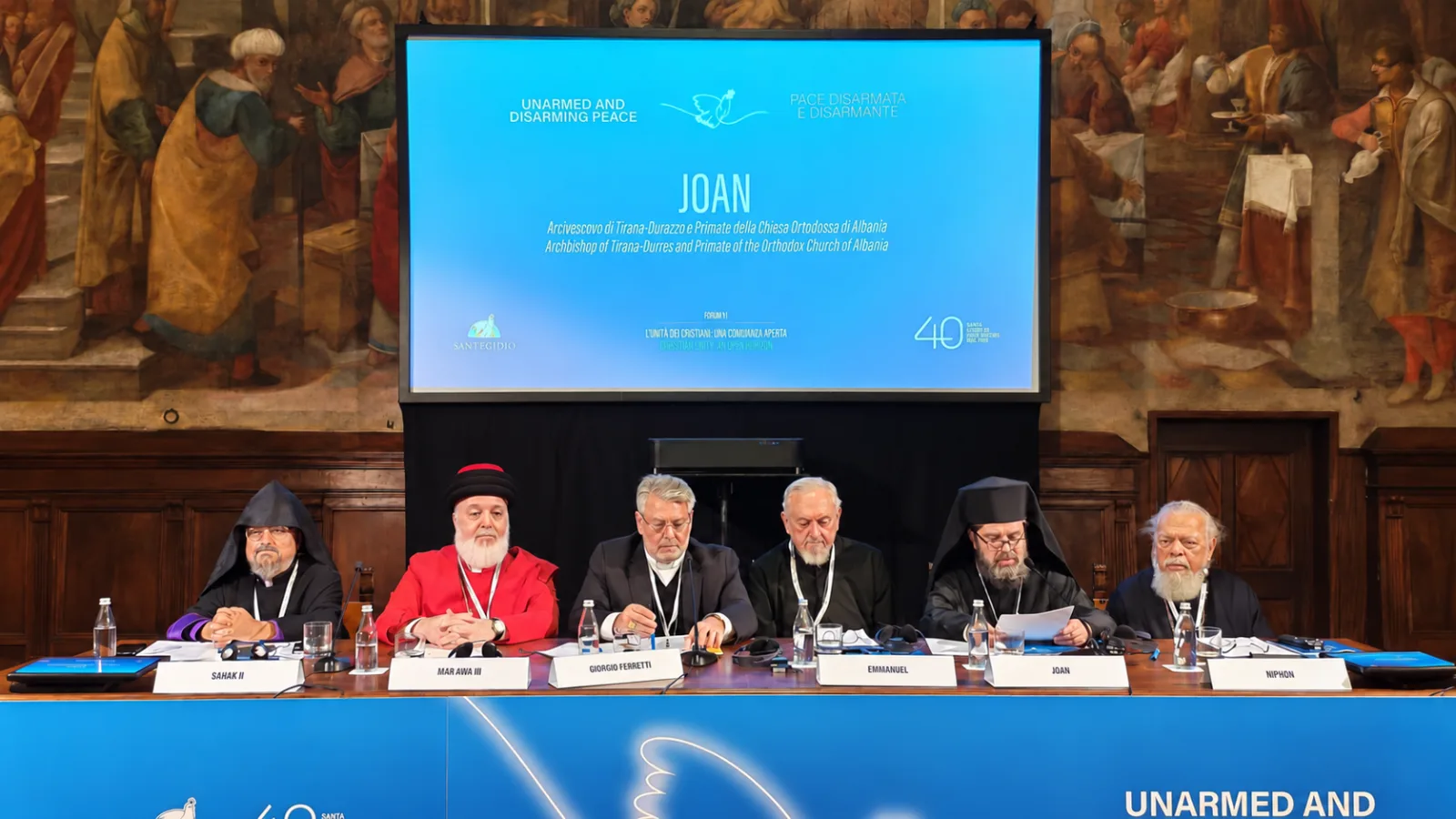
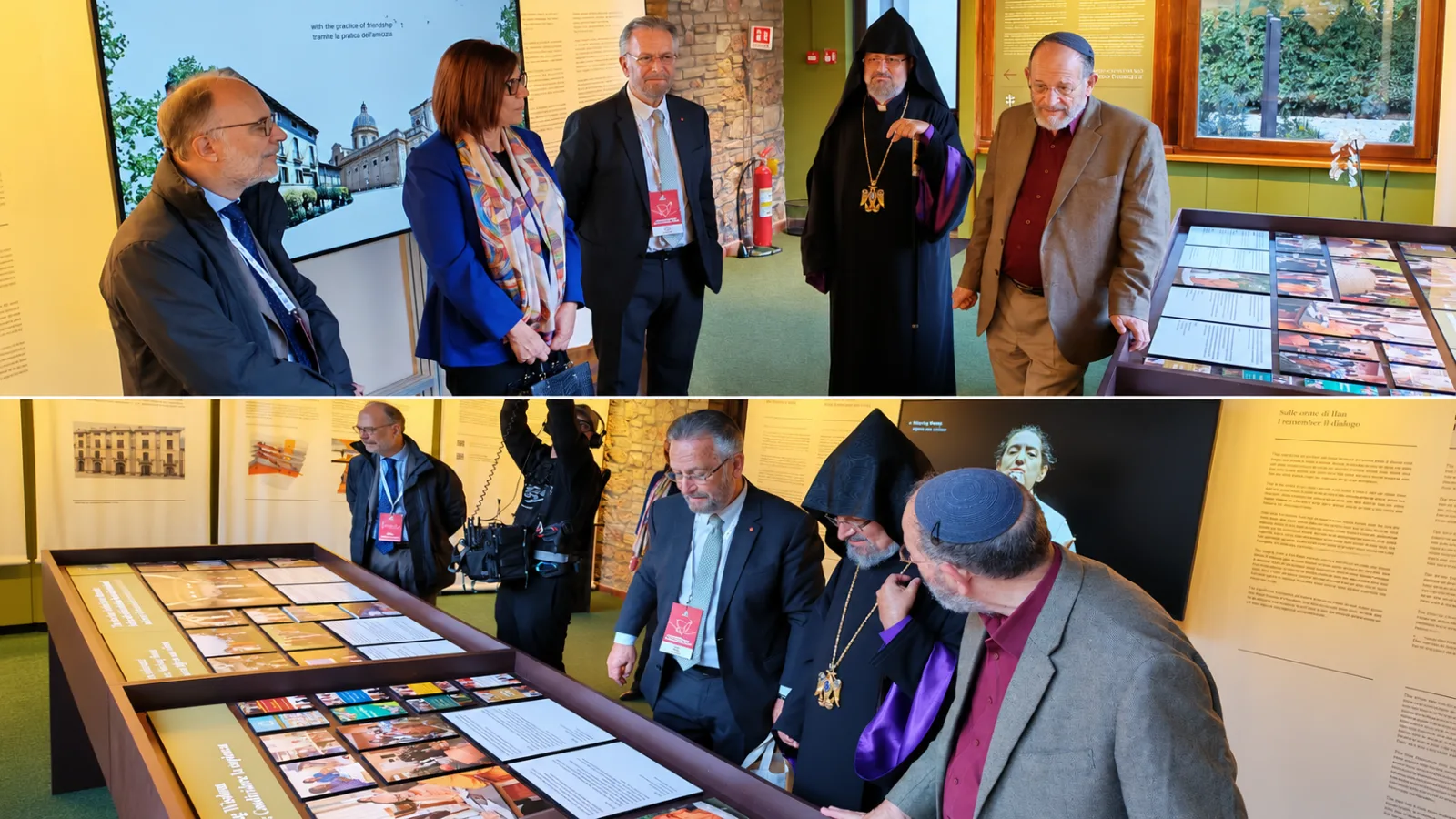
Armenian Patriarch of Turkey Sahak II took part in a session on Christian unity held within the International Meeting for Peace in Assisi. The Patriarch stressed that the quest for unity must rest on an approach that goes beyond shared interests and threats and is centered on Christ.
On Monday, 26 October 2026, in Assisi, Italy, at the International Meeting for Peace, the Armenian Patriarch of Turkey Sahak II spoke at the session titled “Christian Unity: An Open Question.” The gathering, which began at 16:00 in the Il Refettorietto Hall at the Porziuncola, brought together representatives of different church traditions.
In the session moderated by the Catholic Archbishop of Foggia, Giorgio Ferretti, participants included Metropolitan Emmanuel of Chalcedon from the Ecumenical Patriarchate, Catholicos-Patriarch Mar Awa III of the Assyrian Church of the East, Archbishop Joan of the Orthodox Church of Albania, and Archbishop Flavio Pace from the Dicastery for Promoting Christian Unity at the Vatican.
Speakers also included Metropolitan Gregorios from the Patriarchate of Alexandria, Metropolitan Ignatius from the Patriarchate of Antioch, Bishop Kristina Kühnbaum-Schmidt, Chair of the German National Committee of the Lutheran World Federation, and Reynaldo Ferreira Leão Neto from the World Methodist Council.
In his address, Patriarch Sahak II compared Christian unity with models of political and social unity and discussed the spiritual foundations of rapprochement among churches. While acknowledging the value of cooperating around common interests, the Patriarch stated that coming together against a shared threat cannot be the basis for lasting unity.
He articulated this approach with the words, “Christian unity, in the end, cannot be a union formed against someone. There must be a unity in Christ.”
Noting that unity does not mean uniformity, Sahak II emphasized that different churches can preserve their liturgical languages, cultural heritage, and traditions. He stated that the pursuit of unity among churches must safeguard this diversity while also taking into account the depth of the shared faith.