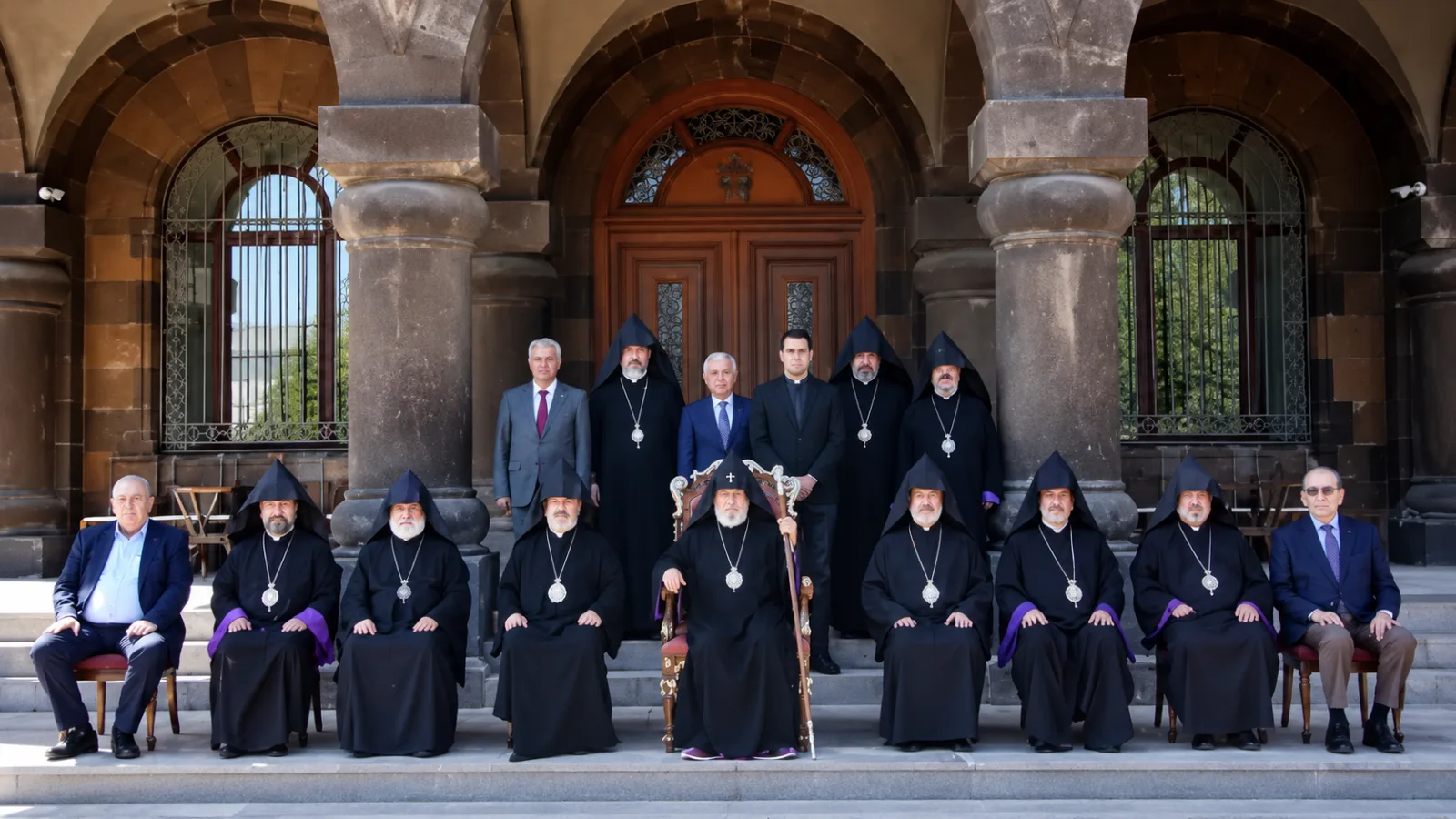
At the Mother See of Holy Etchmiadzin, the meeting of the Supreme Spiritual Council held on 15–17 September addressed Church–state relations, legal proceedings involving clergy, challenges faced in the activities of the Mother See, clerical training, and Christian education. The Council voiced concerns regarding practices it considers state interference in the internal life of the Church.
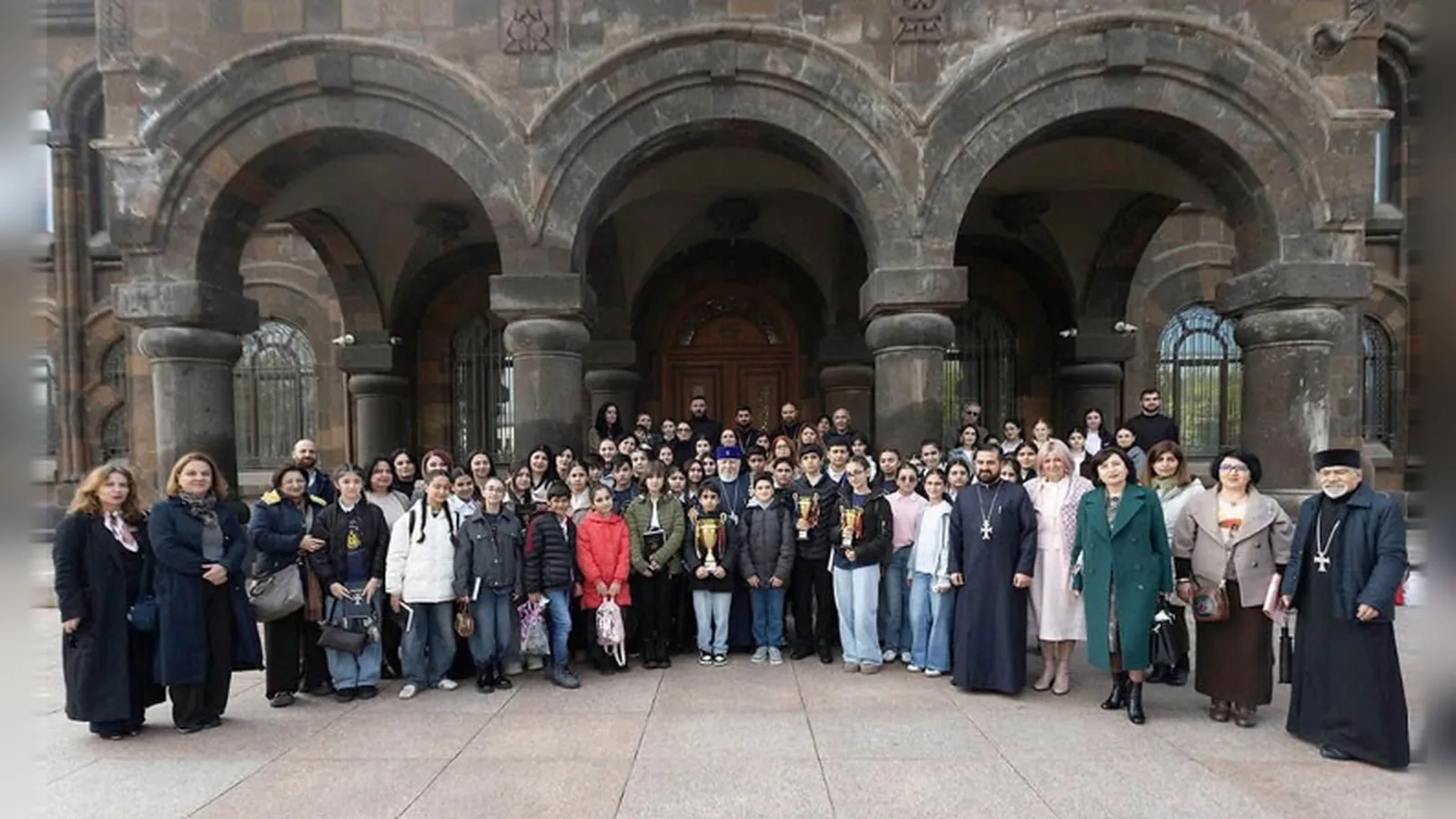
At the Mother See of Holy Etchmiadzin, the regular meeting of the Supreme Spiritual Council was held on 15–17 September under the chairmanship of Catholicos Karekin II.
The three-day agenda included the current state of Church–state relations, ongoing legal proceedings concerning clergy, challenges encountered in the activities of the Mother See, as well as the internal life of the Armenian Apostolic Church, clerical education, and canonical regulations.
The sessions were chaired by Archbishop Natan Hovhannisyan. The meeting was also attended by Archbishop Aram Ateshian, representative of the Armenian Patriarchate of Constantinople, and Bishop Theodoros Zakaryan, Head of Financial Affairs of the Armenian Patriarchate of Jerusalem.
Church–state relations assessed
On Church–state relations and ongoing legal proceedings involving clergy, legal experts Gevorg Danielyan and Ara Zohrabyan made presentations. The discussions evaluated certain legislative initiatives under consideration in the National Assembly of Armenia and items in the government program concerning the Armenian Apostolic Church.
Following the discussions, the Supreme Spiritual Council delivered assessments regarding state officials’ policies toward the Church. Council members expressed the view that certain practices amount to state interference in the Church’s internal life and restrict the Church’s sphere of activity.
In its statement, the Council noted that such practices should also be assessed in terms of the Church’s autonomy and the constitutional guarantees of freedom of expression and religion.
The constitutional status of the Armenian Apostolic Church was also addressed at the meeting. While stating that obstacles hampering clergy in carrying out their regular spiritual ministry must be removed, the meeting discussed the possibilities of using legal avenues in Armenia and international mechanisms to protect the rights of the Church.
Challenges in the activities of the Mother See
Bishop Mushegh Babayan, Head of the Department of Administrative and Economic Affairs of the Mother See of Holy Etchmiadzin, provided information on issues arising in daily activities with state agencies and local authorities.
The report presented noted various difficulties in areas such as conducting charitable and educational programs, registering property rights, and obtaining construction permits.
The Supreme Spiritual Council also evaluated the potential impact of these issues on the Church’s social, educational, and charitable activities. Participants expressed the view that disruptions in these areas could adversely affect educational work, especially for children and youth, as well as the Church’s social services.
Internal regulations of the Church on the agenda
The three-day meeting also discussed work on preparing documents regulating the internal life of the Armenian Apostolic Church.
Archbishop Natan Hovhannisyan and lawyer Ara Zohrabyan briefed the Council on the ongoing work. It was decided to continue preparing the documents in a manner consistent with the canonical principles and established traditions of the Armenian Apostolic Church.
Training the new generation of clergy addressed
One of the key agenda items of the meeting was the training of a new generation of clergy.
Rev. Fr. Husik Vardapet Smbatyan, Director of the Gevorkian Theological Seminary, provided information about the seminary’s activities, outlining efforts to attract new students, enhance the quality of education, and strengthen the teaching staff.
The Supreme Spiritual Council deemed it necessary to review the educational programs, course content, and teaching methods at the seminary. Emphasis was placed on the importance of educating well-equipped clergy to serve the Church by deepening students’ theological knowledge and strengthening their spiritual formation.
A common system for Sunday schools
Work in the field of Christian education was also on the agenda of the meeting.
Very Rev. Fr. Zakaria Baghumyan, Director of the Christian Education Center of the Mother See of Holy Etchmiadzin, provided information on efforts to prepare a guidebook for spiritual leaders to use in Christian education within parishes, to structure Sunday schools under a common system, and to develop new educational materials.
The Supreme Spiritual Council called for expanding the activities of Sunday schools in cooperation with dioceses and spiritual leaders, and encouraging the participation of children and youth in spiritual and educational programs.
The meeting also addressed various issues concerning the activities of the dioceses and the external relations of the Armenian Apostolic Church.
The three-day meeting of the Supreme Spiritual Council concluded with the assessments, prayer, and blessing of Catholicos Karekin II.