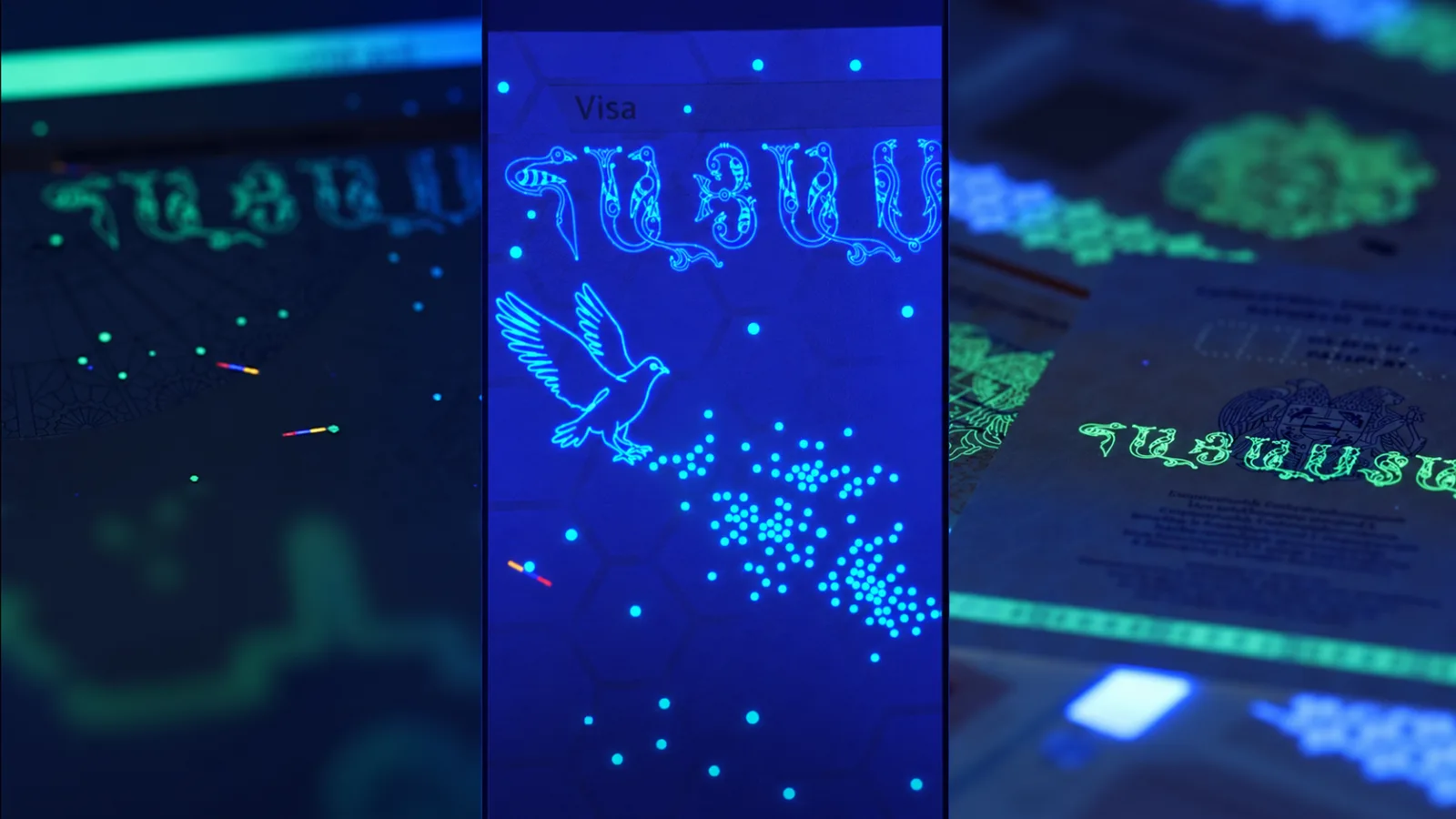
Armenia’s Interior Minister Arpine Sargsyan shared with the public the protective elements used in the new biometric passport. Sargsyan stated that thanks to its advanced security features, the new document will be among the most secure passports in the world.
Details hidden within architectural motifs
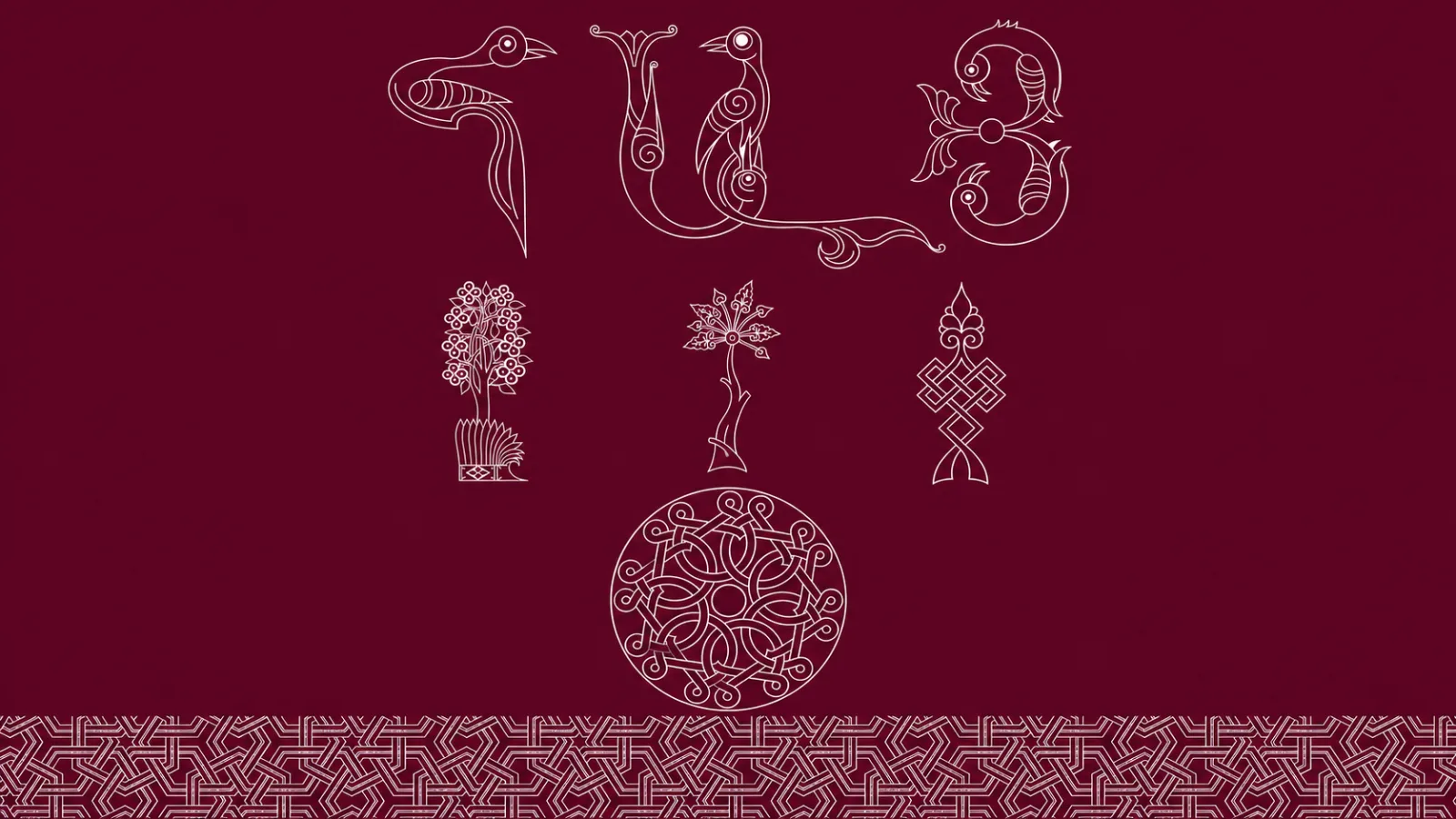
The passport pages feature rosette motifs and geometric patterns inspired by medieval Armenian architecture. Through special processes, these patterns are interconnected into a network whose finest lines and inscriptions can be discerned only with a magnifying glass.
These details, not easily noticeable at first glance, are among the document’s protective layers.
A “flying” peace dove when the pages are flipped
One of the standout features of the new passport is a peace dove visible under ultraviolet light. When the pages are flipped quickly, it creates the impression of the dove in flight.
Another security element is the tricolor fibers embedded in the passport paper. Developed for Armenia, these fibers take on an appearance reminiscent of the country’s flag under ultraviolet light. Sargsyan emphasized that the showcased features represent only a portion of the security mechanisms in the passport.
Identity and cultural heritage brought onto the pages
The new passport’s design also includes elements reflecting Armenian identity, history, and cultural heritage. The map of Armenia, the Armenian alphabet created by Mesrop Mashtots, a depiction of Hayk Nahapet, and historical petroglyphs are among the elements featured on the document’s pages.
According to the Armenian government, the new system aims to align identity documents with the requirements of the International Civil Aviation Organization (ICAO) and to facilitate border crossings. The announced timeline for providing biometric passports and ID cards to citizens is fall 2026.