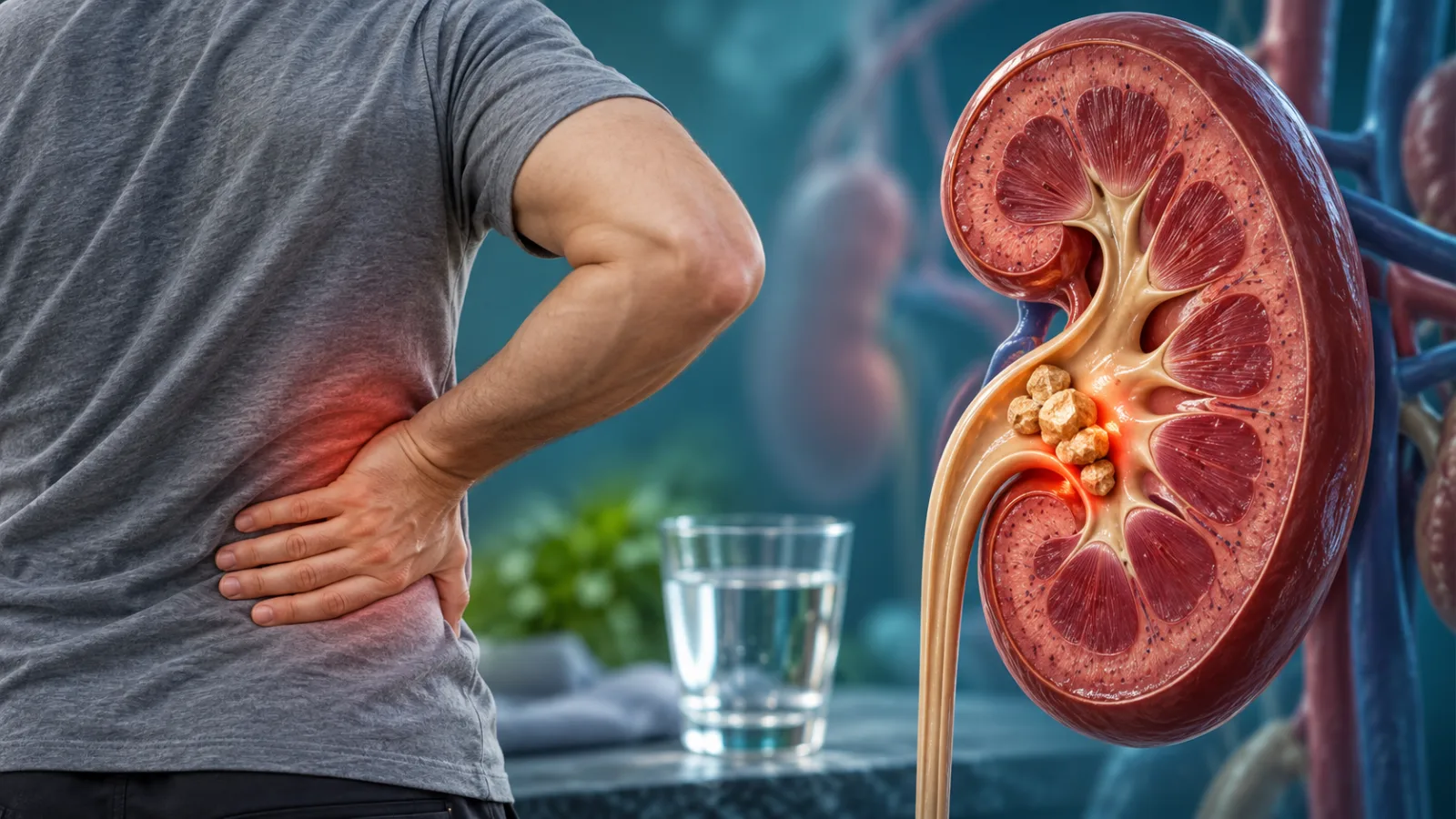
Kidney stones can present with a range of symptoms from severe flank pain to blood in the urine. While treatment varies according to the stone’s size and location, the presence of fever or chills along with pain requires urgent evaluation.
Stones that form in the kidneys may sometimes remain asymptomatic, and sometimes progress into the urinary tract, causing pain strong enough to halt daily life. In assessing the condition, beyond the stone’s size, it is also important whether it blocks urine flow and whether an infection is present.
There is no single cause of stone formation
Kidney stones develop when minerals and salts in the urine crystallize to form hard deposits. Inadequate fluid intake concentrates the urine and can facilitate this process.
A family history of stones, previous kidney stones, certain metabolic disorders, and dietary habits can also influence risk. Therefore, it is not correct to attribute stone formation to just one food or habit.
Pain may radiate from the back to the groin
When the stone passes from the kidney into the ureter—the tube that carries urine to the bladder—pain that waxes and wanes in waves can occur. The pain may start in the back or flank and radiate to the lower abdomen and groin.
Pink, red, or brown discoloration of the urine; pain with urination; a frequent urge to urinate; nausea; and vomiting may also occur. However, these complaints are not exclusive to kidney stones; similar symptoms can appear in other conditions.
Do not wait if fever and obstruction occur together
Obstruction of the urinary tract by a stone accompanied by infection is a urological emergency. If fever or chills accompany flank pain, if there is inability to urinate, intolerable pain, or persistent vomiting, medical care should be sought without delay. In obstruction that develops together with infection, an urgent procedure to drain the urine may be necessary.
The same treatment is not applied for every stone
Some small stones can pass on their own. In contrast, intervention may be needed for large stones, those that block the urinary tract, or those causing severe pain.
Treatment options include breaking the stone with shock waves applied from outside the body, advancing a thin instrument through the urinary tract to remove or fragment the stone, and reaching the kidney through a small incision in the back for large stones. The choice is made according to the characteristics of the stone and the patient’s health status. Laboratory analysis of the stone contributes to a plan to prevent recurrence.
Cutting out calcium completely is not necessary for prevention
Adequate fluid intake is among the fundamental steps of prevention for most stone types. It is also important to limit excessive salt and processed foods high in sodium. Adjustments related to animal protein and oxalate-containing foods should be made according to the stone type.
Not everyone with calcium stones needs to avoid calcium-containing foods. Calcium taken in appropriate amounts with food can bind to oxalate in the intestine and help reduce the risk of some stones forming. Therefore, the nutrition plan should be based on individual assessment rather than arbitrary restrictions.
General recommendations for water intake may not be appropriate for people who have fluid restrictions due to heart or kidney failure. The prevention approach should be determined by considering the person’s comorbidities, stone type, and test results.
Sources
- NIDDK — Patient education resources on kidney stones
- European Association of Urology — Guidelines on urolithiasis