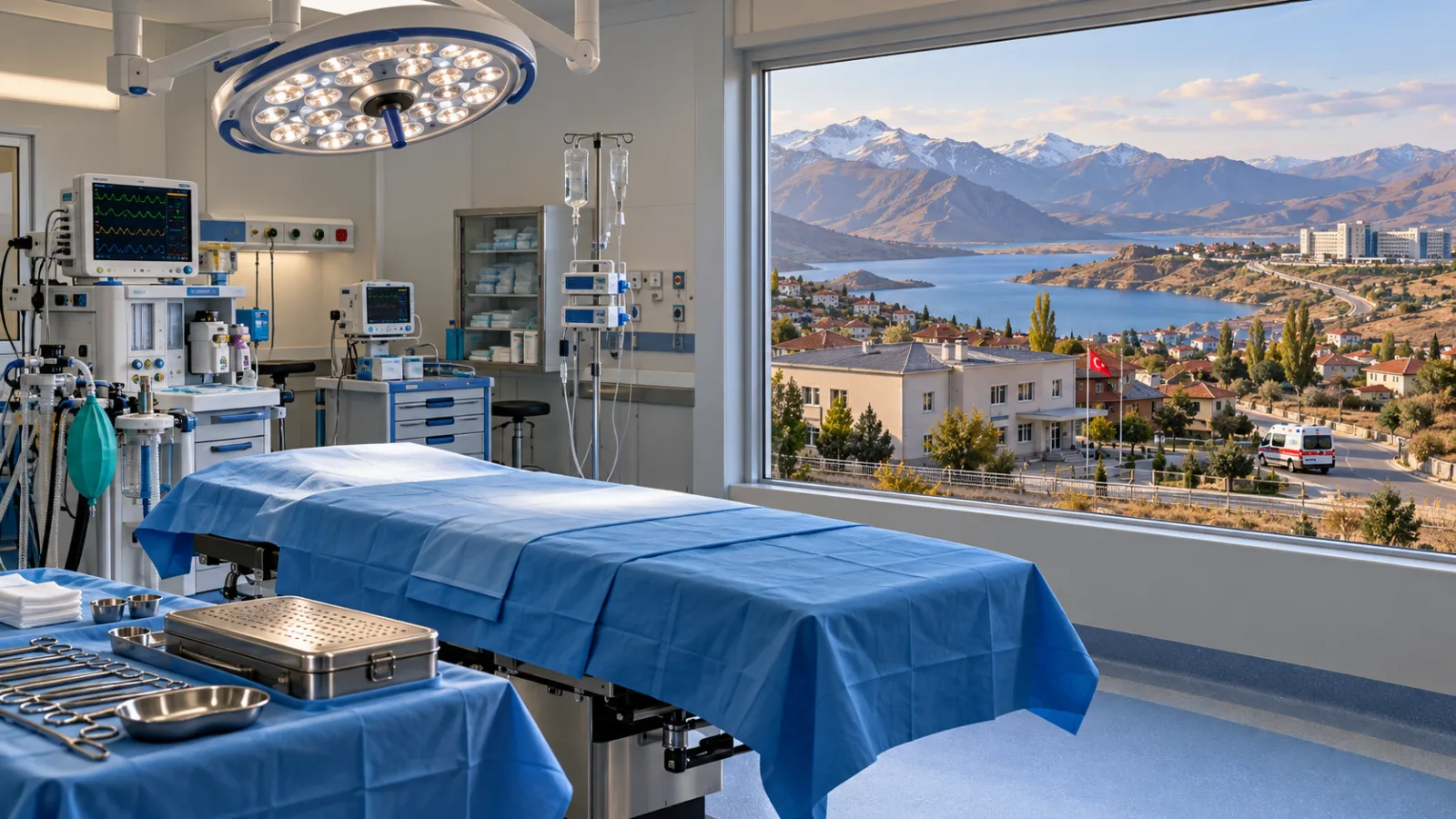
At first glance, this may look like a local health story. However, behind it lies an important debate for the future of healthcare in Turkey:
Should the patient go to the major center, or should qualified healthcare services, under appropriate conditions, be brought to where the patient lives?
The biggest advantage of the Gevaş example is the ability to provide healthcare on site. A patient living in the district not having to go to the city center for surgery means reduced transportation, accommodation, time, and financial burdens for the patient and their relatives.
Moreover, such practices benefit not only the patient. More effective use of operating rooms in district hospitals, increased experience of healthcare personnel, and, over time, the development of the hospital’s institutional capacity can also create important opportunities.
Another advantage is reducing patient congestion at major centers. Performing appropriate and low-risk surgical cases in districts can allow large training and research hospitals to focus more on complex patients.
However, we also need to discuss the other side of the coin.
Taking surgery to the district is not merely taking the surgeon to the district.
Surgery is a system that works together with anesthesia, the operating room, sterilization, the laboratory, imaging, access to blood products, intensive care, and, when needed, a rapid referral organization. Therefore, while successfully performing an operation is important, the real issue is to make this service safe and sustainable.
The most critical issue here is patient selection.
Which patients will be operated on in the district? Which cases will be referred to the central hospital? If an unexpected complication develops, how quickly can the patient be transported to a tertiary center? Will postoperative outcomes be regularly monitored and compared with the results of central hospitals?
The success of the Regional Chief Physician model may well be determined by the answers to these questions.
Another point is the proper use of human resources. When assigning physicians from major centers to districts, healthcare services at the center—and especially the activities of teaching clinics—must not be disrupted. Because physicians in training and research hospitals do not only perform surgeries; they also train residents, manage complex patients, and engage in scientific production.
Therefore, the goal should not be "to perform every surgery everywhere."
The goal is;
to treat the right patient, by the right team, with the right infrastructure, and in the right hospital.
The first urological surgical operation performed at Gevaş State Hospital is an important example in this respect. If this model is supported by patient safety, proper case selection, a strong referral chain, and the scientific tracking of outcomes, it could be highly valuable for strengthening healthcare services in districts.
Because equality in health does not mean performing every surgery in every hospital.
Health equity means that no matter where a person lives, they can access the qualified healthcare they need in a timely and safe manner.