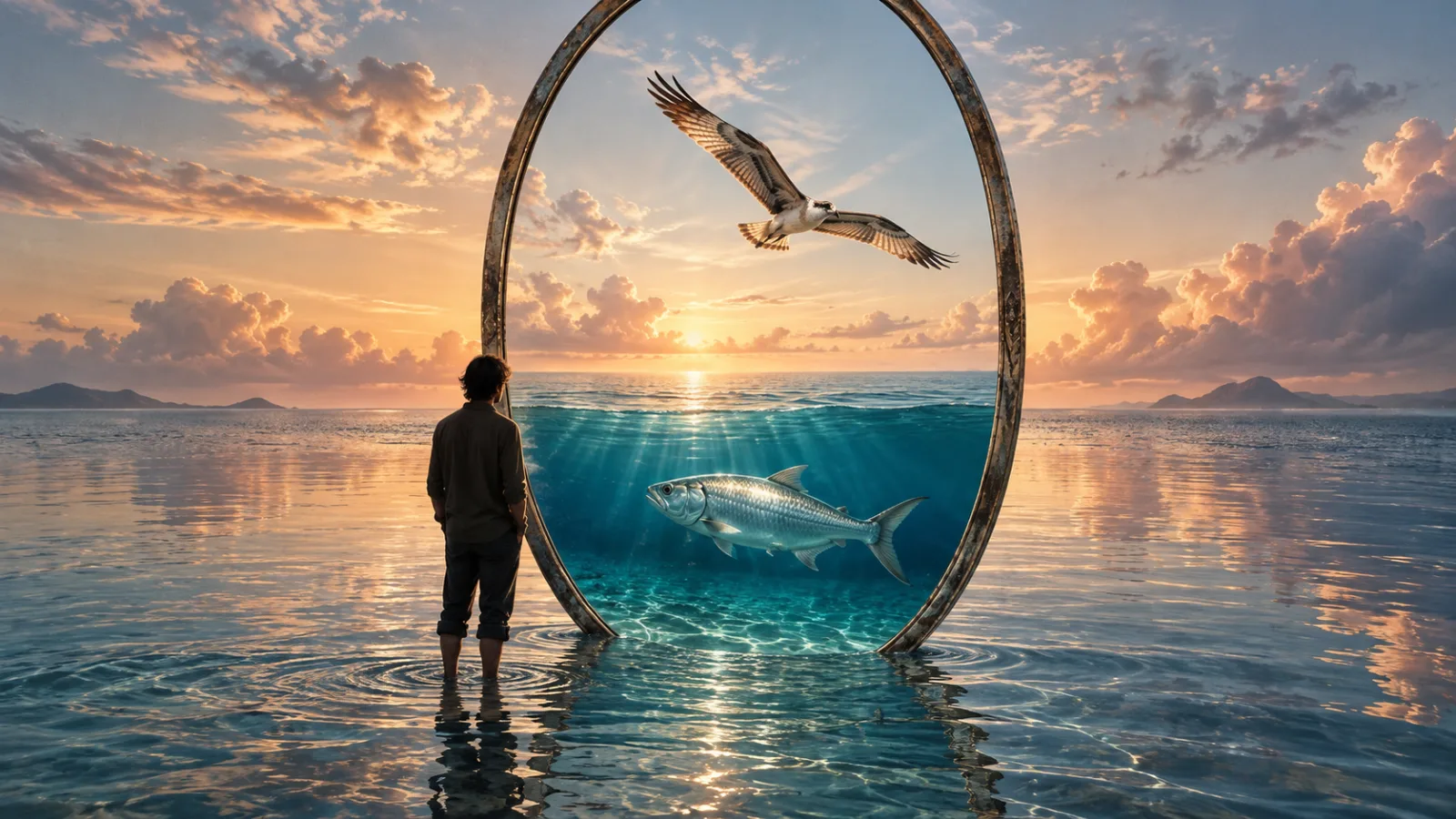
Do fish look down on us because of our swimming abilities? Do birds despise us because we cannot fly? Of course not. Because both swimming and flying are endowments bestowed on them by their nature. Not an earned achievement.
Yet we tend to think that being human is an earned title. We believe that because we could tame fire, invent writing, and build civilizations, we left being animals behind and reached an enlightened plane of existence. But let us admit that we made no effort to become human. We were born human. Being born into a species, a nation, a family, or a fortune cannot be a cause for pride. Being human, too, is not a rank attained through effort, but merely membership in a species.
So why do we always put ourselves on the other pan of the scale?
To claim that fish cannot feel pain on the grounds that they lack a cerebral cortex like humans is a typical example of treating human biology as a universal standard. As if pain were real only when experienced in the way we know it, and consciousness existed only when observed in the form familiar to us. The more humans exalt their own traits, the more they sacralize the divide between themselves and other living beings. But what is that sacredness based on?
Why is a fish not sacred? Because the gods we believed in throughout history chose to communicate with us. They chose us. And like children unwilling to share a parent’s attention with anyone, we placed ourselves at the center of every narrative.
Yet the reason that allows us to make sense of the world should also make it a responsibility to doubt our own judgments. Does the faculty of judgment make us more privileged? Or is this faculty, rather than a privilege, a great responsibility?
To be crushed under this responsibility and to take the human experience as the standard, and to think there is a hierarchy between us and the rest of the world, is to conceal our ignorance under the guise of superiority. Instead of debating the deficiencies of other living beings, we should confront the limits of our own comprehension and accept that experiences beyond the reach of our senses may also exist.
The means at our disposal should be tools not of our desire to dominate the world, but of our effort to coexist with it. Only in this way can we speak of a rank that is truly earned.